
Pack It! — Travel Puzzle Game
Project Type: Interactive Game Development / UX/UI Design
Project Status: Prototype Development & Gameplay Refinement
Project Overview
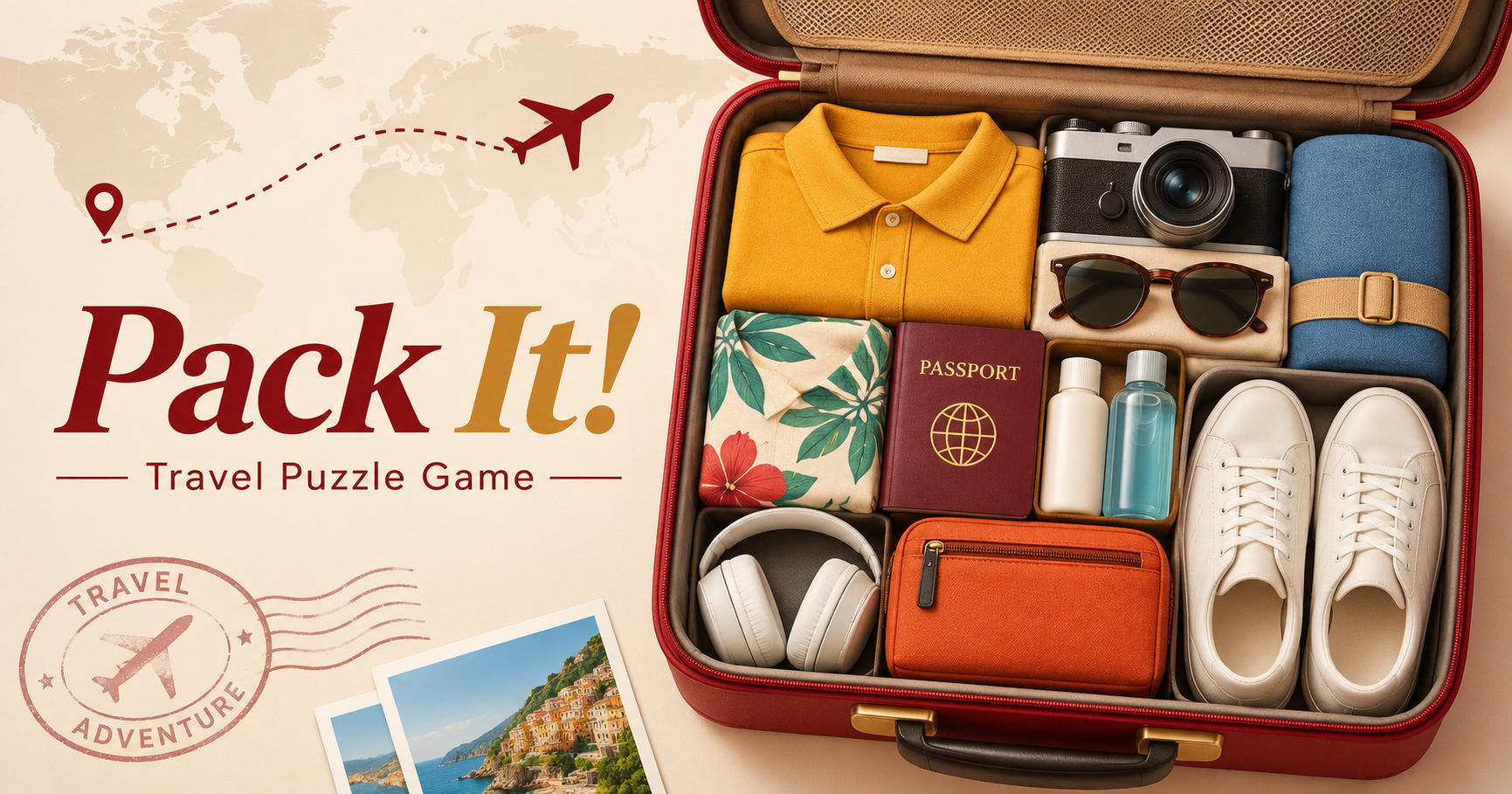
Pack It! is a travel-inspired puzzle game that challenges players to strategically organize items inside a suitcase before departing for their next destination.
Inspired by the spatial problem-solving mechanics of classic puzzle games, Pack It! combines suitcase organization, travel progression, and interactive gameplay into an engaging experience.
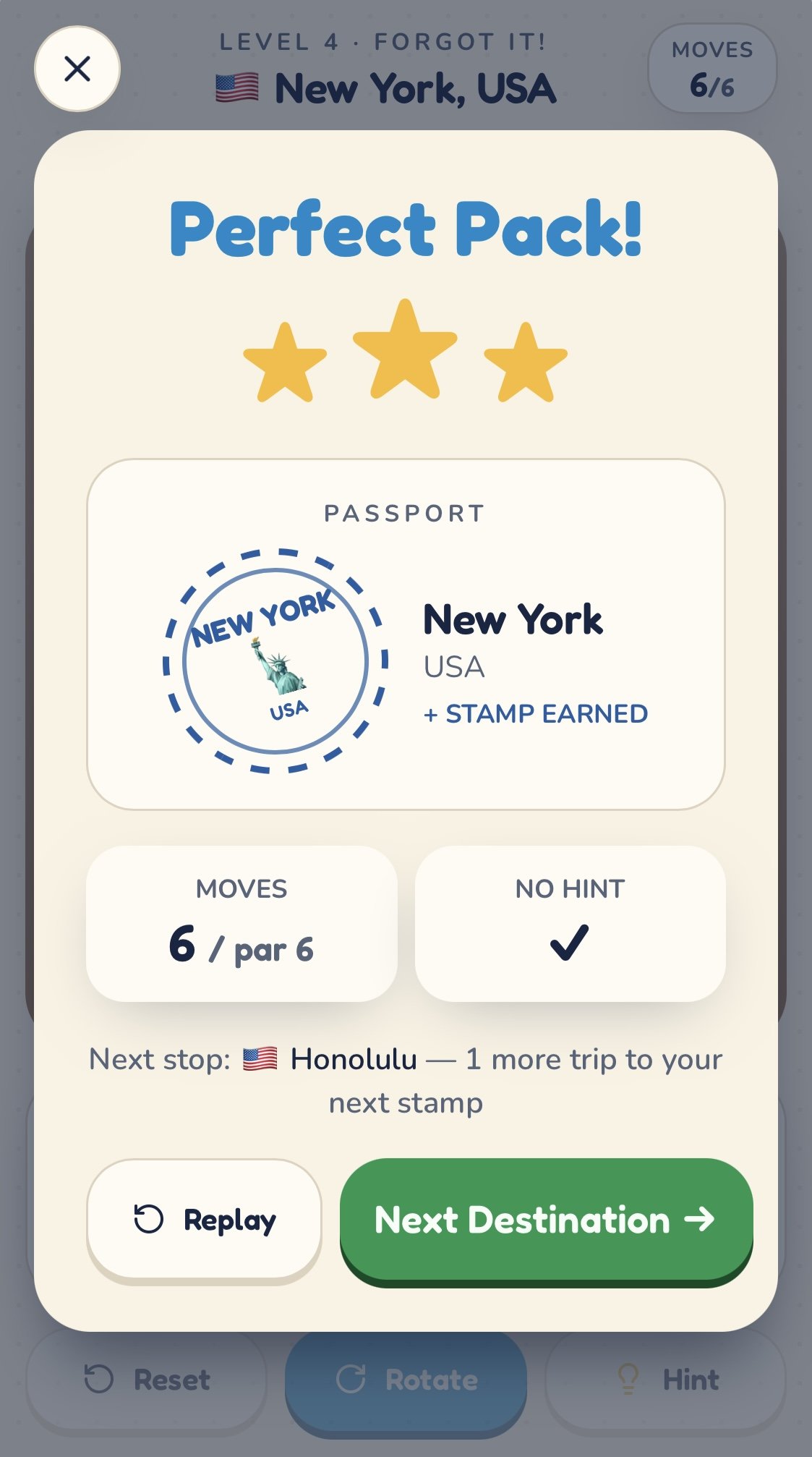
Players must fit clothing, shoes, accessories, and other travel essentials into a limited suitcase space. Successfully completing a level earns a passport stamp and advances the player toward their next destination.
The goal was to transform an everyday travel activity into an entertaining, strategic puzzle experience.
My Role
Game Designer • Product Designer • UX/UI Designer • Gameplay Systems Designer • Front-End Developer • Creative Director
Tools & Technologies
AI-Assisted Development
UI/UX Design
Interactive Gameplay Prototyping
Game Mechanics & Logic Design
Responsive Interface Design
Level Design
User Interaction Testing
Iterative Development & Debugging
The Challenge
Puzzle games must balance simplicity, challenge, and player satisfaction.
While organizing a suitcase appears straightforward, translating this concept into an interactive game introduced several design and development challenges.
Items needed recognizable shapes and consistent dimensions. Placement mechanics needed to feel intuitive while maintaining logical collision boundaries.
Additionally, each level needed to introduce enough variety to remain engaging without becoming frustrating.
The primary challenge was creating an accessible puzzle experience that rewards strategic thinking while remaining visually appealing and easy to understand.
The Solution
Designed an interactive suitcase-packing game centered on spatial reasoning, item placement, and destination-based progression.
Core gameplay concepts include:
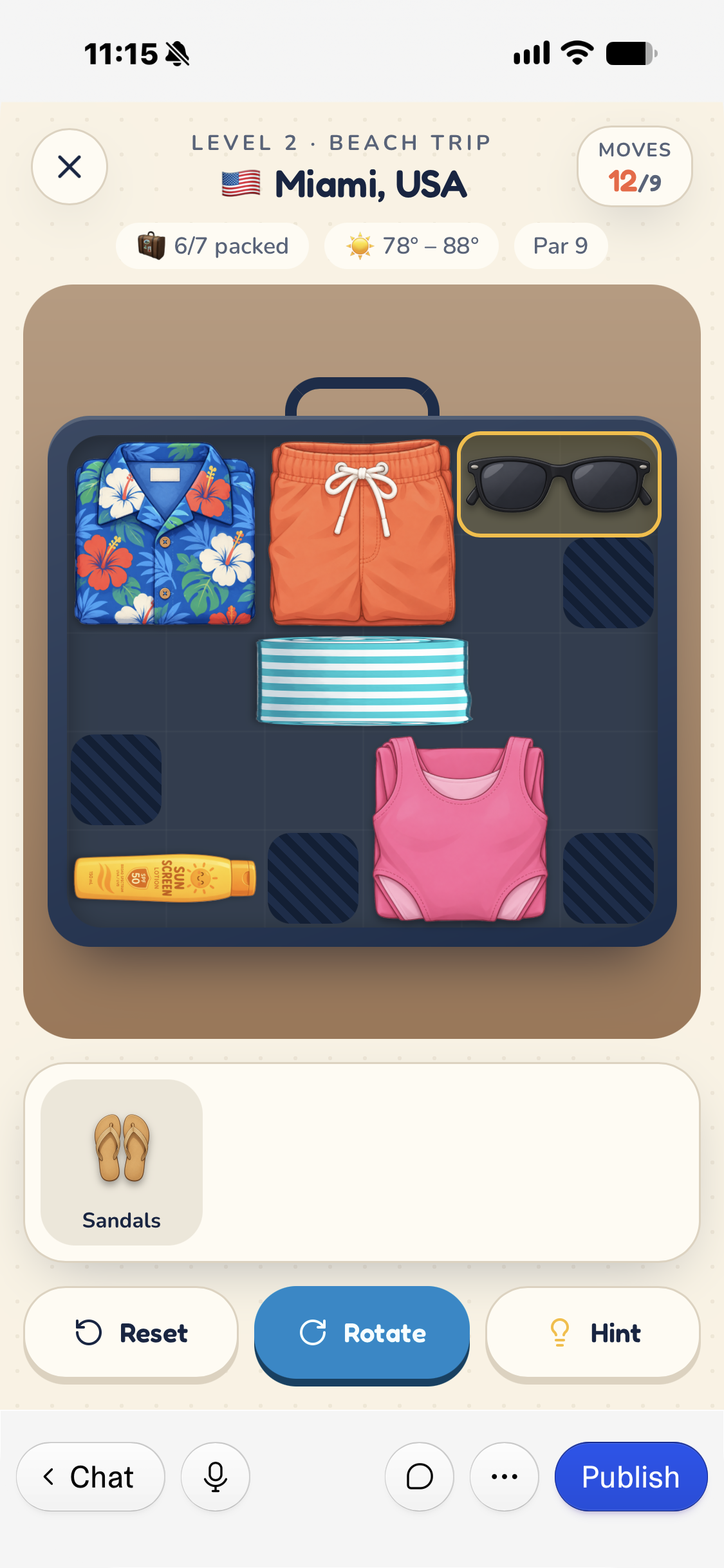
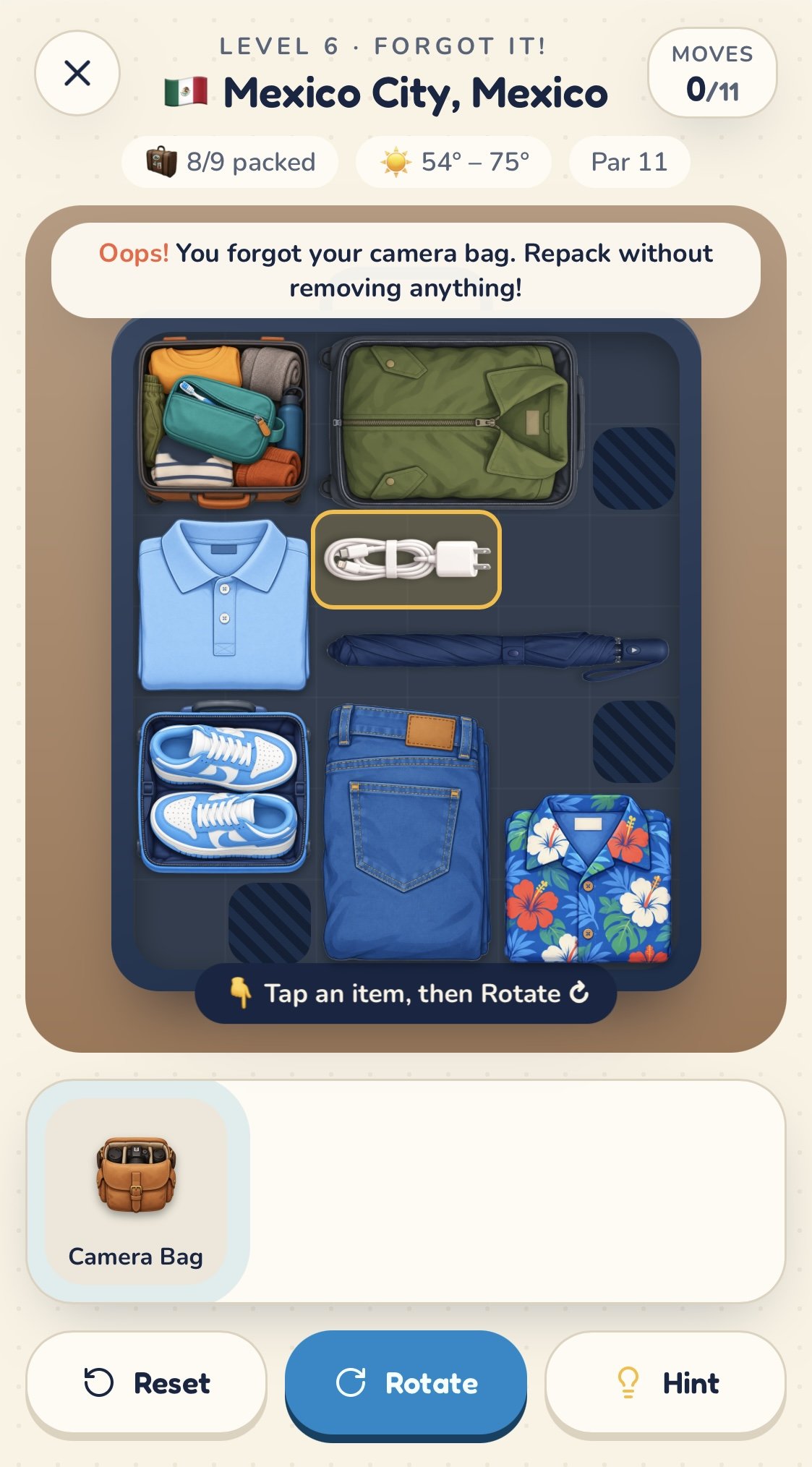
Suitcase Packing: Arrange differently shaped travel items within a limited packing area.
Strategic Item Placement: Use spatial reasoning to maximize available space.
Destination-Based Levels: Complete packing challenges associated with different cities.
Passport Stamp Rewards: Earn collectible stamps for successfully completing destinations.
Forgot It! Mechanic: Introduce additional items that challenge players to reconsider their existing arrangement.
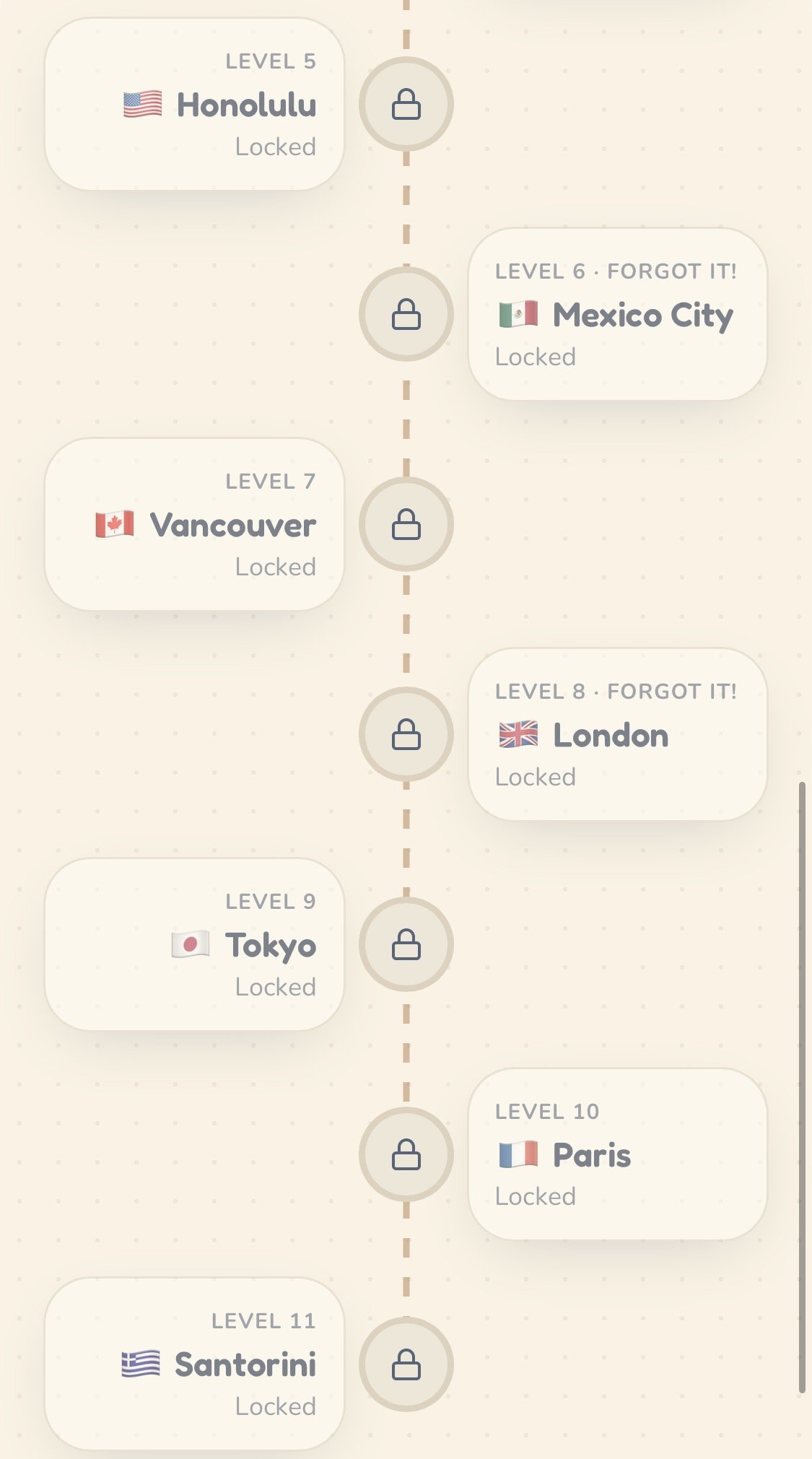
Travel Progression: Connect individual levels through a larger travel-inspired journey.
Process
1. Concept Development & Research
Explored traditional spatial puzzle mechanics and ways to translate them into a travel-themed experience.
Identified an opportunity to use suitcase packing as a familiar, understandable activity that could support progressively challenging gameplay.
Established the core gameplay loop:
Select Items → Organize Suitcase → Complete Packing Challenge → Earn Passport Stamp → Advance to Next Destination
2. Game Mechanics & Systems Design
Developed gameplay concepts around:
Item dimensions and placement
Available suitcase space
Item positioning and alignment
Puzzle completion conditions
Level progression
Additional-item challenges
Focused on creating rules that reward planning and efficient use of space rather than random item placement.
3. UX/UI Design
Designed the game interface around clear visual communication and direct player interaction.
The layout prioritizes the suitcase, available items, and gameplay controls so players can quickly understand their objective.
Created travel-themed interface elements to establish a recognizable identity and connect the puzzle mechanics to the larger journey.
4. Level Design
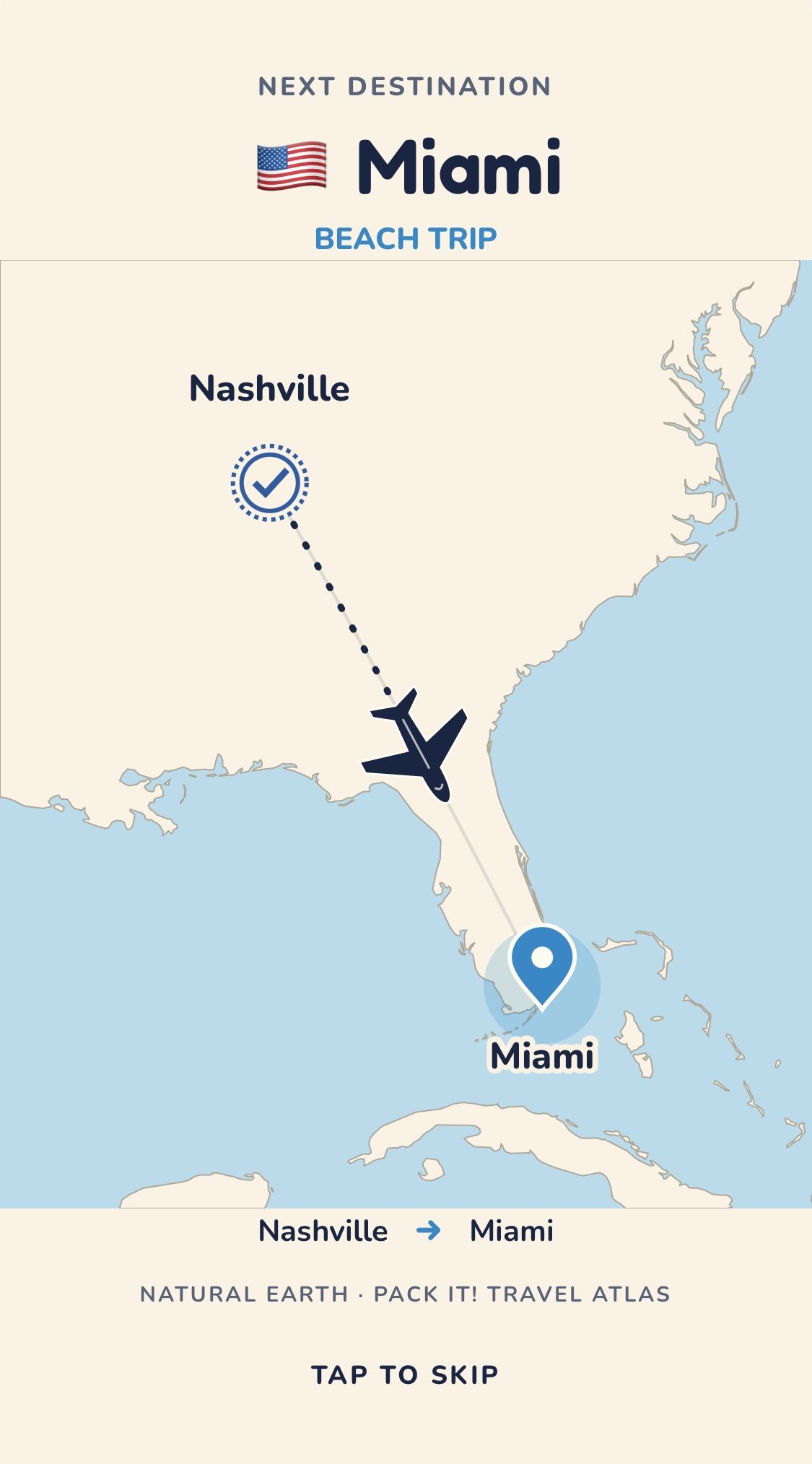
Developed and iterated on destination-based puzzle prototypes, including Nashville and Miami.
Adjusted item sizes, available space, and puzzle arrangements to explore level difficulty and player progression.
Introduced the concept of a travel route that visually connects completed destinations and upcoming challenges.
5. Development & Iteration
Built and refined interactive gameplay prototypes through AI-assisted development and repeated functional testing.
Focused on:
Item placement behavior
Item scaling and alignment
Suitcase boundary interactions
Gameplay usability
Scrolling and responsive layouts
Destination progression
Identified and worked through challenges involving irregular item shapes, positioning consistency, and interface responsiveness.
Outcomes
Created an original travel-themed puzzle game concept.
Developed interactive suitcase-packing gameplay prototypes.
Established destination-based progression and reward systems.
Built and refined city level designs.
Gained practical experience designing gameplay logic, interactive interfaces, and spatial puzzle mechanics.
Strengthened iterative debugging, usability evaluation, and AI-assisted development skills.
What I’d Improve Next
Refine item alignment and placement accuracy.
Improve interactions with irregularly shaped items.
Optimize item selection and scrolling on smaller screens.
Expand destination-based levels and difficulty progression.
Develop a geographically accurate travel progression map.
Introduce additional puzzle variations and rewards.
Conduct structured user testing to evaluate game difficulty and enjoyment.
Prepare for a broader playable release.